
Other
Tang Fish A Complete Guide to Species, Care, Diet, and Aquarium Requirements

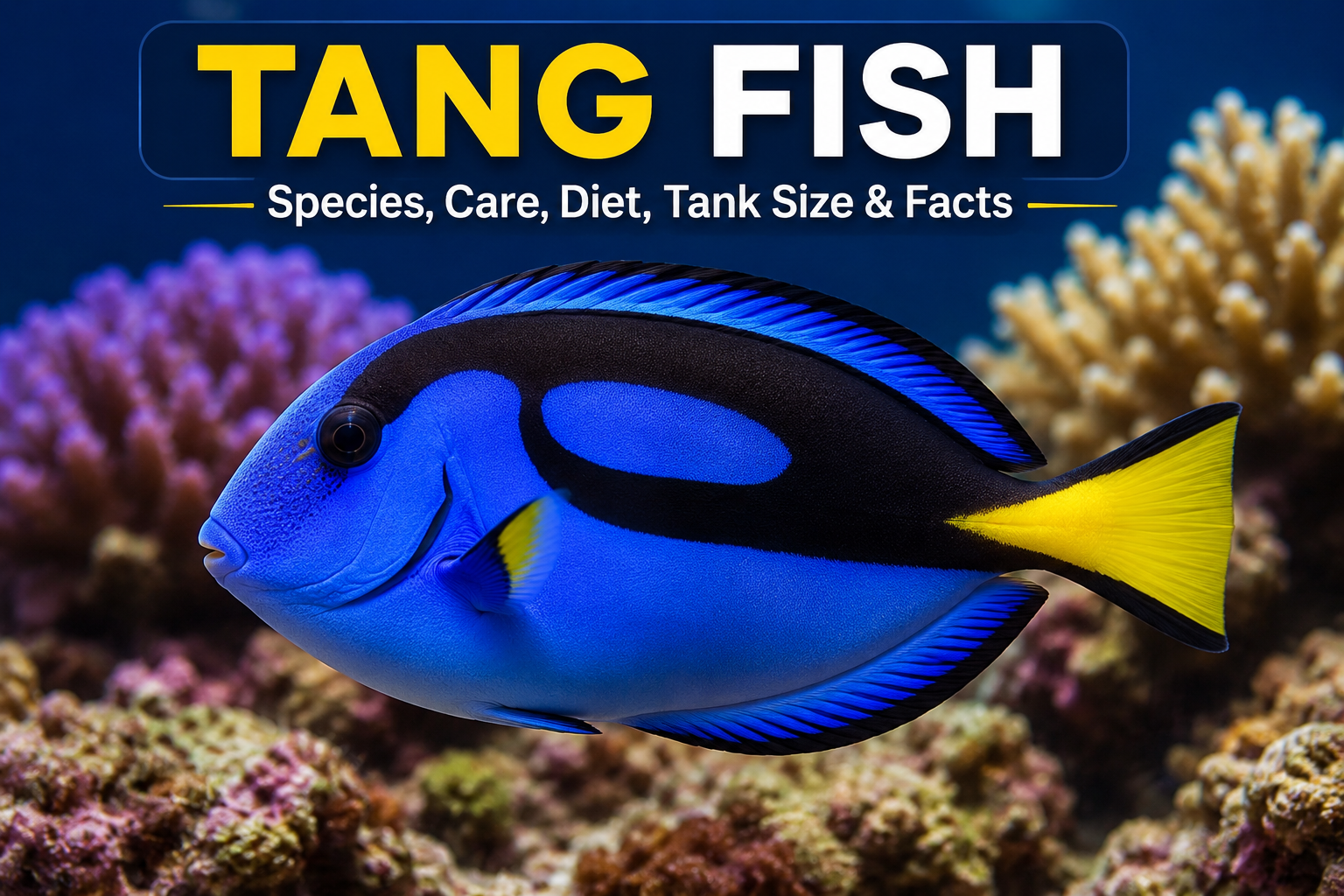
Tang fish are among the most recognizable saltwater aquarium fish, known for their vivid colors, active swimming habits, and distinctive body shapes. Often called surgeonfish, tangs belong to the family Acanthuridae and include popular species such as the Yellow Tang, Blue Tang, Sailfin Tang, Kole Tang, and Powder Blue Tang.
Their striking appearance makes them appealing to marine aquarium keepers, but tang fish are not simply decorative pets. They are active swimmers that need adequate space, stable marine water conditions, a suitable diet, and carefully selected tank mates.
If you are considering adding a tang to a saltwater aquarium, understanding its size, behavior, feeding needs, and long-term care requirements is essential.
What Is a Tang Fish?
A tang fish is a marine fish belonging primarily to the family Acanthuridae. The name “surgeonfish” comes from the sharp, scalpel-like spines located near the base of the tail. These spines can be used for defense and territorial disputes, so tangs should always be handled carefully.
Tangs are found in tropical and subtropical marine environments, particularly around coral reefs and rocky coastal habitats. Many species spend much of their time swimming across reef areas while grazing on algae and other food sources.
In an aquarium, this natural behavior translates into a fish that is constantly moving, exploring rockwork, and searching for food.
Why Are Tang Fish Popular?
Aquarists often choose tangs because they offer several appealing characteristics:
- Bright and varied coloration
- Active swimming behavior
- Interesting territorial personalities
- Algae-grazing habits
- Compatibility with many appropriately selected marine fish
- A wide range of species and body shapes
However, their care requirements vary considerably from one species to another. A tang that is suitable for one aquarium may be inappropriate for another because of differences in adult size, swimming needs, temperament, and sensitivity.
Popular Types of Tang Fish
There are many tang species available to marine aquarists. Some are relatively manageable for experienced beginners, while others are better suited to advanced hobbyists.
Yellow Tang
The Yellow Tang (Zebrasoma flavescens) is instantly recognizable because of its bright yellow body. It is an active algae grazer and one of the best-known tangs in the aquarium hobby.
Yellow Tangs can become territorial, particularly toward other tangs or fish with a similar body shape. Adequate swimming space and thoughtful stocking are therefore important.
Blue Tang
The Blue Tang, also known as the Regal Blue Tang or Hippo Tang, is scientifically known as Paracanthurus hepatus. Its vivid blue-and-black pattern and yellow tail make it especially popular.
Despite its attractive appearance, this species grows into an active swimmer and should not be selected simply because it is attractive as a juvenile. Its eventual adult size and need for open swimming space should be considered before purchase.
Sailfin Tang
The Sailfin Tang (Zebrasoma veliferum) gets its common name from its large dorsal and anal fins, which can spread dramatically.
This species can become quite large, making a spacious aquarium particularly important. It also needs opportunities to graze and explore.
Kole Tang
The Kole Tang, or Yellow-Eyed Kole Tang (Ctenochaetus strigosus), belongs to the bristletooth group of tangs. It is valued for its ability to browse algae and other material from rocks and aquarium surfaces.
Compared with some larger tangs, its eventual size can make it a more practical choice for certain marine aquariums, although it still requires sufficient swimming room and excellent water quality.
Powder Blue Tang
The Powder Blue Tang (Acanthurus leucosternon) is famous for its blue body, darker facial area, and contrasting markings.
It is an impressive fish but can be more demanding than some other commonly kept tangs. Stable water conditions, adequate space, good nutrition, and careful disease prevention are particularly important.

Other Tang Species
Other commonly discussed tangs include:
- Achilles Tang
- Purple Tang
- Scopas Tang
- Convict Tang
- Clown Tang
- Tomini Tang
- Naso Tang
- Sohal Tang
- Powder Brown Tang
The right species depends on the aquarium’s size, existing livestock, filtration capacity, and the keeper’s experience.
Tang Fish Size and Aquarium Requirements
One of the most important considerations before buying a tang is adult size, not the size of the fish at the store.
Tang Fish ary considerably in adult length. General care guidance places different species anywhere from roughly 6 inches to more than 20 inches, depending on the species. Aquarium requirements therefore cannot be reduced to one tank-size recommendation for every tang.
How Big Should a Tang Fish Tank Be?
A suitable aquarium should provide:
- Plenty of horizontal swimming space
- Open areas for continuous movement
- Rockwork for grazing
- Hiding places and retreats
- Strong, reliable filtration
- Stable temperature and salinity
- Good oxygenation and water circulation
Some general care guides list 50 gallons as a minimum for certain tangs, but larger species and highly active swimmers require substantially more space. The adult size and swimming behavior of the particular species should determine the aquarium size.
For this reason, buying a small tang for a small aquarium with the intention of upgrading later can create problems if the upgrade does not happen as planned.
Tang Fish Water Conditions
Tangs are marine fish and depend on stable saltwater conditions. Sudden changes can cause stress and make fish more vulnerable to health problems.
A commonly cited general temperature range for tangs is around 74–80°F (23–27°C), while specific gravity is often maintained around 1.020–1.025, depending on the aquarium system and species.
Rather than focusing on a single number, consistency is key.
Important parameters to monitor include:
| Water factor | Why it matters |
|---|---|
| Temperature | Helps maintain stable physiological conditions |
| Salinity | Essential for marine fish health |
| Ammonia | Should remain at an undetectable level in a properly cycled aquarium |
| Nitrite | Should remain at an undetectable level |
| Nitrate | Should be controlled through maintenance and filtration |
| pH | Stability is more important than chasing a particular number |
| Oxygen and circulation | Important for active marine fish |
Regular testing, appropriate filtration, water changes, and avoiding overcrowding can help maintain a stable environment.
What Do Tang Fish Eat?
Most tangs are strongly associated with algae grazing, although diets vary among species. Marine algae and seaweed should form an important part of the diet for many commonly kept tangs.
Good food choices can include:
- Marine algae sheets or nori
- Algae-based pellets
- Herbivore marine flakes
- Spirulina-based foods
- Naturally growing algae
- Suitable frozen foods as dietary supplements
Some tangs will also accept foods such as mysis or brine shrimp, but meaty foods should not replace the algae-rich component of the diet for species that naturally depend heavily on plant material.
How Often Should You Feed a Tang?
Tangs are active grazers and can benefit from regular access to appropriate algae-based food.
Instead of relying on one large feeding, many aquarists provide smaller portions or continuous access to algae sheets. The exact feeding routine should be adjusted according to the species, fish size, tank conditions, and whether the fish is maintaining healthy body condition.
A healthy tang should have a good appetite and maintain normal coloration and body condition.
Tang Fish Behavior and Temperament
Tangs are active rather than sedentary fish. They spend considerable time swimming and grazing, which is one reason a long aquarium with unobstructed swimming areas is valuable.
They can also be territorial.
A tang may become aggressive toward another tang, particularly when the fish have similar body shapes, coloration, or ecological niches. Some species are more assertive than others.
A useful approach is to consider compatibility before adding a fish rather than waiting for aggression to develop.
How to Reduce Aggression
Several practices can help:
- Provide enough swimming and grazing territory.
- Avoid overcrowding.
- Use rockwork to create separate visual areas and hiding places.
- Research the temperament of the exact species.
- Introduce compatible livestock thoughtfully.
- Be particularly cautious when keeping multiple tangs.
Some care guidance recommends adding a tang relatively late in the stocking process because established tangs may become territorial toward newcomers.
Tang Fish Tank Mates
There is no universal list of perfect tank mates because compatibility depends on species, aquarium dimensions, individual temperament, and stocking density.
Potential companions in an appropriately sized marine aquarium can include certain:
- Clownfish
- Gobies
- Wrasses
- Blennies
- Angelfish
- Groupers
- Hawkfish
- Puffers
- Eels
These combinations are not automatically safe in every aquarium. Each species should be researched individually, especially regarding adult size, aggression, feeding competition, and reef compatibility.
Common Tang Fish Health Problems
Tangs can be sensitive to stress and poor aquarium conditions. Some common concerns include marine ich, bacterial infections, fin problems, and other stress-related conditions.
Signs of a Healthy Tang
When choosing a fish, look for:
- Clear eyes
- Strong appetite
- Bright and consistent coloration
- Intact fins
- Normal swimming behavior
- A healthy-looking body rather than an excessively thin appearance
Warning signs include loss of appetite, unusual spots, cloudy eyes, rapid or difficult breathing, weight loss, damaged fins, and lethargy.
If a fish shows signs of illness, prompt consultation with an experienced aquatic professional or aquatic veterinarian is appropriate.
Why Quarantine Matters
Quarantining new marine fish can help reduce the risk of introducing parasites or disease into an established aquarium.
A separate quarantine system also gives the aquarist an opportunity to observe the new fish’s appetite, behavior, and physical condition before introducing it to the display tank.
This is particularly useful when keeping valuable or sensitive marine livestock.
Do Tang Fish Help Control Algae?
Yes, many tang species naturally graze on algae, and this behavior can be useful in a marine aquarium.
However, a tang should not be purchased solely as an algae-cleaning solution.
A healthy aquarium requires balanced nutrient management, appropriate filtration, maintenance, lighting, and stocking. A fish is not a substitute for correcting an underlying algae problem.
Tangs also need their own nutritional needs met, so naturally occurring algae in the aquarium may not always be enough.
Are Tang Fish Good for Beginners?
It depends on the species and the aquarist’s experience.
Some tangs can be manageable when their requirements are properly met, while other species are considerably more demanding because of their adult size, sensitivity, swimming needs, or territorial behavior. General care guidance rates tang difficulty from beginner to advanced depending on species.
For a first marine fish, it is usually better to choose based on the aquarium you can realistically maintain rather than choosing a tang simply because it is colorful.
Before purchasing one, ask:
- How large will this species become?
- Is my aquarium large enough for its adult size?
- Can I provide an appropriate algae-rich diet?
- Are my existing fish compatible?
- Can my filtration handle the eventual bioload?
- Do I have a quarantine setup?
- Am I prepared to care for the fish for many years?
Tang Fish Care Checklist
Before bringing a tang home, make sure you can provide:
- A properly cycled saltwater aquarium
- Adequate swimming space
- Stable temperature and salinity
- Strong filtration and suitable water circulation
- Regular water testing
- An algae-rich diet
- Suitable rockwork and hiding areas
- Compatible tank mates
- A quarantine plan
- Long-term space for the fish’s adult size
Planning these requirements in advance can prevent many of the problems associated with keeping tangs in undersized or unstable aquariums.
Frequently Asked Questions About Tang Fish
Is a tang fish freshwater or saltwater?
Tang fish are saltwater marine fish. They are naturally associated with tropical marine environments and are commonly kept in saltwater aquariums.
Why are tangs called surgeonfish?
They are called surgeonfish because many species have sharp, scalpel-like spines near the base of the tail. These structures are used primarily for defense and territorial interactions.
What is the best food for tang fish?
For many tang species, marine algae and seaweed should be an important part of the diet. Algae sheets, herbivore pellets, spirulina-based foods, and suitable marine foods can be used as part of a balanced feeding program.
How big can tang fish get?
Adult size varies widely by species. Some remain relatively modest in size, while others can grow much larger than the typical aquarium fish. Always research the adult size of a particular tang before purchasing it.
Can tang fish live with other fish?
Yes. Tangs can live successfully with many marine fish when the aquarium is appropriately sized and the species are compatible. However, tangs can be territorial, particularly toward other tangs and similarly shaped fish.
Can you keep two tang fish together?
Sometimes, but it requires careful planning. Multiple tangs can become aggressive toward one another, so aquarium size, species selection, body shape, introduction method, and individual temperament all matter.
Do tang fish eat algae?
Yes. Many tangs are important algae grazers and naturally spend much of their time searching surfaces for algae. In captivity, they should still receive an appropriate supplemental diet rather than relying entirely on algae growing in the aquarium.
How long do tang fish live?
Lifespan varies by species and husbandry. Some tangs can live for many years in suitable conditions, so purchasing one should be considered a long-term commitment.
Conclusion
Tang fish are beautiful, energetic marine fish that can become impressive inhabitants of a well-maintained saltwater aquarium. Their colorful appearance and natural algae-grazing behavior are major attractions, but successful care depends on more than appearance.
The most important factors are appropriate aquarium space, stable water quality, a suitable algae-rich diet, compatible tank mates, and proper long-term planning.
If you are choosing a tang, start by researching the exact species rather than treating all tangs as identical. Consider its adult size, temperament, feeding requirements, and swimming behavior against the aquarium you actually have. With the right preparation, a tang can be a fascinating and rewarding part of a marine aquarium for many years.


A winter forecast can help people plan ahead for colder temperatures, snow, rain, strong winds, and other seasonal weather changes. While long-range forecasts cannot predict every day with certainty, they can provide useful clues about broad patterns that may influence the winter season.
Understanding how seasonal outlooks work is important because winter weather can vary significantly from one region to another. A forecast that suggests a colder season in one area may not mean the same conditions will occur somewhere else.
In this guide, we explain what a winter outlook means, which factors influence it, how reliable long-range predictions are, and how you can prepare for changing winter conditions.
What Is a Winter Forecast?
A winter forecast is an outlook that describes the expected weather patterns during the colder months. Depending on the forecast period, it may focus on temperatures, precipitation, snowfall, storms, or general seasonal trends.
Short-range forecasts are generally more useful for specific daily conditions, while seasonal forecasts are designed to identify broader patterns.
For example, a seasonal outlook may indicate:
- A higher chance of colder-than-average temperatures
- Increased or decreased precipitation
- Greater potential for snow in some regions
- Periods of unusual warmth
- Changing storm activity
- A generally wetter or drier winter
These outlooks should be viewed as guidance rather than guarantees.
Why Winter Forecasts Matter
Winter weather can affect everyday life in many ways. Knowing the potential seasonal pattern can help households, businesses, travelers, and communities prepare more effectively.
Travel Planning
Snow, ice, heavy rain, and strong winds can create difficult travel conditions. A broader seasonal outlook can encourage travelers to pay closer attention to local weather updates during periods of potentially unsettled weather.
Home Preparation
Cold weather may increase heating needs and place additional pressure on household systems. Preparing insulation, heating equipment, windows, and emergency supplies before severe weather arrives can be useful.
Agriculture
Farmers often monitor seasonal weather trends when planning crops and managing water resources. However, agricultural decisions should also consider local forecasts because seasonal outlooks cannot provide precise conditions for individual farms.
Outdoor Activities
Winter sports and outdoor events depend heavily on temperature and precipitation. A seasonal outlook can provide general planning information, while short-term forecasts are more appropriate for deciding whether a particular event should go ahead.

What Factors Influence a Winter Outlook?
Meteorologists consider several atmospheric and oceanic patterns when developing seasonal forecasts.
Ocean Temperatures
Sea-surface temperatures can influence atmospheric circulation and contribute to weather patterns over large areas. Changes in major ocean regions may affect temperature and precipitation patterns far from the water itself.
Atmospheric Circulation
The movement of air around the planet plays an important role in winter weather. Large-scale circulation patterns can influence where cold air, warmer air, moisture, and storm systems travel.
El Niño and La Niña
El Niño and La Niña are important climate patterns associated with changes in tropical Pacific Ocean temperatures. They can influence weather patterns across different parts of the world.
Their effects are not identical everywhere, however. Local geography and other atmospheric factors can modify how these patterns affect a particular region.
Arctic Conditions
Changes in Arctic temperatures, sea ice, and atmospheric circulation can sometimes be associated with shifts in winter weather patterns farther south.
Because the atmosphere is interconnected, several factors may interact at the same time.
Seasonal Forecast vs. Daily Weather Forecast
One of the most important things to understand is that a seasonal outlook is not the same as a daily weather forecast.
| Forecast Type | Typical Purpose | Reliability for Specific Days |
|---|---|---|
| Short-range forecast | Daily weather and immediate conditions | Higher |
| Medium-range forecast | Weather over the coming days | Moderate to high |
| Extended forecast | General conditions over several weeks | Lower for specific details |
| Seasonal outlook | Broad temperature and precipitation patterns | Not designed for exact daily weather |
A seasonal forecast might suggest that a region has an increased chance of being wetter than normal. It cannot tell you exactly which days will receive rain months in advance.
How Accurate Are Long-Range Winter Forecasts?
Long-range forecasts can be useful, but they have limitations.
Weather is influenced by a complex combination of atmospheric conditions. Small changes can produce very different outcomes over time. As the forecast period becomes longer, confidence in specific details generally decreases.
This means readers should avoid interpreting a seasonal outlook as a promise that a particular city will experience a specific number of snowstorms or extremely cold days.
The best approach is to use seasonal information for general preparation and rely on shorter-range forecasts for specific decisions.
How to Read a Winter Forecast
When looking at a seasonal outlook, pay attention to the wording.
Temperature Outlook
A forecast may describe temperatures as:
- Below average
- Near average
- Above average
These descriptions usually refer to a comparison with historical climate conditions for the region.
Precipitation Outlook
Precipitation can include rain, snow, sleet, or other forms of moisture depending on the location and temperature.
A wetter-than-normal outlook does not necessarily mean more snow. If temperatures remain above freezing, increased precipitation could mainly fall as rain.
Probability Matters
Forecasts often use probabilities instead of absolute statements. A higher probability of a particular outcome does not mean that outcome is guaranteed.
For this reason, it is important to read the forecast explanation rather than relying only on a headline.
How to Prepare for Winter Weather
Regardless of the exact seasonal outlook, basic preparation can make winter conditions easier to manage.
At Home
Consider:
- Checking heating equipment before the coldest period.
- Inspecting doors and windows for drafts.
- Keeping essential supplies available.
- Protecting outdoor pipes where freezing is possible.
- Checking weather alerts regularly.
- Keeping emergency lighting and backup power options available.
While Traveling
Before a winter journey:
- Check the latest local weather forecast.
- Look for road or transportation warnings.
- Allow extra travel time during severe weather.
- Keep essential items available if traveling long distances.
- Avoid unnecessary travel during dangerous conditions.
For Businesses
Businesses can prepare by reviewing weather-related emergency procedures, protecting vulnerable equipment, and considering how severe weather could affect employees, deliveries, customers, and transportation.
What to Watch as Winter Approaches
As the season gets closer, several indicators can provide a clearer picture of potential conditions.
Temperature Trends
Watch for persistent changes in regional temperatures rather than focusing on one unusually cold or warm day.
Precipitation Patterns
Rain and snowfall trends can change throughout the season, so regular updates are more useful than relying on a single early outlook.
Storm Systems
Major winter storms are generally Winter forecast easier to assess as they get closer. Forecast confidence often improves significantly during the days leading up to an event.
Official Weather Updates
For safety-related decisions, use forecasts and warnings from recognized meteorological authorities and local emergency agencies.
Winter Forecast: What Should You Expect?
The most useful way to think about a seasonal outlook is as a planning tool.
A forecast may identify a greater likelihood of certain broad conditions, but actual weather can still change considerably from week to week. Regional differences are also important. Mountain areas, coastal locations, deserts, and inland regions can experience very different winter conditions during the same season.
Instead of asking only whether winter will be “cold” or “warm,” consider several questions:
- Is the region expected to be wetter or drier than normal?
- Are temperatures likely to vary significantly?
- Is snowfall relevant to the area?
- Could strong storms affect travel?
- What local weather risks are most important?
This approach provides a more realistic understanding of seasonal weather.
Frequently Asked Questions
What is a winter forecast?
A winter forecast is an outlook describing possible temperature, precipitation, and weather patterns during the winter season. It provides broad guidance rather than exact daily predictions.
Can a winter forecast predict snow months in advance?
It can sometimes indicate whether conditions may favor more or less precipitation or colder temperatures, but it generally cannot accurately predict the exact date, location, or amount of snowfall months ahead.
Are seasonal forecasts reliable?
Seasonal forecasts can provide useful information about broad patterns, but their uncertainty is greater than that of short-term weather forecasts. They should be used for general planning rather than precise predictions.
What affects winter weather?
Ocean temperatures, atmospheric circulation, climate patterns such as El Niño and La Niña, regional geography, and other atmospheric conditions can all influence winter weather.
When does a winter forecast become more accurate?
Forecast confidence generally improves as the predicted weather gets closer. Short-range forecasts are normally more useful for specific weather events than forecasts made many months ahead.
How should I prepare for winter weather?
Check heating systems, prepare emergency supplies, monitor local weather updates, and make a plan for travel disruptions or severe weather.
Conclusion
A winter forecast can be a valuable starting point for understanding the season ahead, but it should not be treated as a guarantee of specific weather events. Seasonal outlooks focus on broad patterns, while short-term forecasts provide more useful information for individual days and approaching storms.
By following updated local forecasts, understanding the limits of long-range predictions, and preparing for possible cold, precipitation, and travel disruptions, households and businesses can be better prepared for whatever winter brings.


Are Forever Stamps Still Good for International Mail?
If you have ever stood in front of your desk with an envelope in one hand and a stack of stamps in the other, you know the feeling. You pause and wonder whether those stamps you bought years ago still work, especially when the letter is going overseas. Prices go up, postal rules change, and suddenly a simple question becomes surprisingly confusing: are Forever Stamps Still Good for international mail?
This question matters more than people admit. A wrongly stamped letter can mean delays, returns, or lost messages. And if you send mail internationally for business, family, or collecting, mistakes can cost time and money. In this guide, we will slow everything down and explain it clearly, without jargon and without guesswork.
By the end, you will know exactly when Forever stamps work, when they do not, and how to use them correctly for international shipping.
What Forever Stamps Actually Mean
Before answering whether Forever Stamps Still Good for international mail, it helps to understand what these stamps were designed for in the first place.
Forever stamps were introduced to simplify domestic mailing. Instead of buying new stamps every time postage rates increase, you buy one stamp that always covers the cost of a standard First-Class Mail letter within the United States.
The key promise behind Forever stamps
- They never expire
- They hold their value even after price increases
- They are meant for standard domestic letters
That last point is where many people get confused. Forever stamps are flexible, but they are not magical.
Domestic vs International Postage: Why It Matters
International mail operates under a different pricing structure. Sending a letter from New York to California is not priced the same as sending one to Germany, Canada, or Australia.
International postage depends on:
- Destination country
- Mail class
- Weight of the envelope
- Size and thickness
- Additional services like tracking
Because of this, a single Forever stamp does not automatically cover international postage. However, that does not mean Forever stamps are useless for overseas mail.
Are Forever Stamps Still Good for International Mail?
Here is the short and honest answer: Yes, Forever Stamps Still Good for international mail, but only as postage value, not as a single solution.
A Forever stamp represents a dollar value equal to the current First-Class domestic letter rate. You can use that value toward international postage, as long as the total stamp value matches or exceeds the required international rate.
In other words, Forever stamps are still valid currency, but you may need more than one.
How International Postage Is Calculated
To understand how many stamps you need, you have to think in terms of total postage value rather than stamp type.
International letters are priced by:
- Base international letter rate
- Additional ounces
- Non-standard envelope size
For example, sending a one-ounce letter internationally costs more than a domestic letter. Therefore, one Forever stamp is not enough on its own.
A simple way to think about it
- One Forever stamp equals the current domestic First-Class rate
- International mail requires higher postage
- You can combine multiple Forever stamps to reach the required amount
This is why the question are Forever Stamps Still Good has a practical answer rather than a yes-or-no one.
Using Forever Stamps for International Letters
You can absolutely use Forever stamps on international mail if you apply enough postage. Many people do this successfully every day.
Common scenarios where this works
- Personal letters to friends or family abroad
- Greeting cards sent internationally
- Lightweight documents
- Non-commercial correspondence
However, accuracy matters. Underpaying postage is one of the most common mistakes.
How Many Forever Stamps Do You Need?
The exact number changes as postage rates change, but the principle stays the same. You divide the international postage cost by the current value of one Forever stamp.
For example:
- If international letter postage costs more than one domestic rate
- You will need multiple Forever stamps
- You can mix Forever stamps with other denominations
This flexibility is one reason Forever stamps remain popular even for international use.
When Forever Stamps Are Not Enough
Although Forever stamps hold value, they are not ideal for every situation.
Situations where they may cause problems
- Large or heavy envelopes
- Packages instead of letters
- Mail requiring customs forms
- Tracked or insured international shipments
In these cases, it is usually better to buy international-specific postage.
Forever Stamps and International Mail Classes
Another important detail is mail class. Forever stamps apply value toward postage, but international mail often falls under specific classes.
Common international mail types
- First-Class Mail International
- Priority Mail International
- Express Mail International
Forever stamps can only help cover First-Class Mail International costs. They are not designed for premium services.
Common Myths About Forever Stamps
There is a lot of misinformation floating around. Let’s clear up a few myths.
Myth 1: Forever stamps expire
They do not. Forever stamps remain valid indefinitely.
Myth 2: Forever stamps are only for U.S. mail
Not true. Forever Stamps Still Good as postage value anywhere USPS accepts stamps.
Myth 3: One Forever stamp works worldwide
This is false. International mail almost always requires more postage.
Understanding these myths helps avoid frustration at the post office counter.
International Postage Mistakes to Avoid
Even experienced mailers make mistakes. Here are some common ones to watch out for.
- Using too few stamps
- Forgetting to check envelope weight
- Ignoring size restrictions
- Placing stamps incorrectly
- Skipping customs requirements when needed
These errors can delay or return your mail, regardless of stamp type.
Are Older Forever Stamps Still Good?
Yes. This question comes up often, especially when people find stamps in drawers or collections. Older Forever stamps still carry full value, even if their printed price looks outdated.
This is another reason people trust them. Forever stamps remove the stress of changing rates.
Using Forever Stamps for International Postcards
Postcards are slightly different from letters. International postcard rates are often lower than full letter rates, but still higher than domestic ones.
You can use Forever stamps here too, as long as the total value matches the postcard rate.
Many collectors and travelers rely on this method successfully.
Business Use: Is It Practical?
For businesses that send international mail regularly, Forever stamps may not be the most efficient option. Counting stamps on each envelope can be time-consuming and prone to error.
However, for occasional international correspondence, Forever stamps offer flexibility and convenience.
Collectors and Forever Stamps
Stamp collectors often ask whether using Forever stamps internationally affects collectible value. Once a stamp is used, it no longer has collectible resale value. However, older unused Forever stamps may still interest collectors depending on design and rarity.
Environmental and Cost Considerations
Using existing Forever stamps instead of buying new international stamps can reduce waste and save money. It also prevents unused stamps from sitting forgotten in drawers.
From a practical perspective, this makes Forever stamps a sustainable choice.
Are Forever Stamps Still Good for the Future?
Postal systems evolve, but the core promise of Forever stamps remains strong. They are backed by postal policy and designed for long-term use.
While international rates may continue to rise, Forever stamps will continue to hold their domestic value. That makes them a reliable component of mailing, even across borders.
Quick Reference Table: Forever Stamps and International Mail
| Use Case | Suitable with Forever Stamps |
|---|---|
| International letters | Yes, with enough stamps |
| International postcards | Yes, with correct value |
| Heavy envelopes | Sometimes |
| Packages | No |
| Tracked services | No |
Why the Question Keeps Coming Back
The reason people keep asking are Forever Stamps Still Good is simple. Mailing feels old-fashioned, but the rules still matter. And because international mail is less frequent for many people, uncertainty creeps in.
This guide exists to remove that uncertainty.
Final Thoughts: Should You Use Forever Stamps Internationally?
So, are Forever Stamps Still Good for international mail? Yes, they are. Not as a shortcut, not as a single-stamp solution, but as a flexible and valid form of postage.
They work best when you:
- Understand current international rates
- Use enough stamps to cover total postage
- Keep weight and size in mind
- Avoid premium services that require specific labels
Forever stamps were designed to simplify mailing, not complicate it. Used correctly, they still do exactly that.


Every once in a while, a name begins circulating online in a way that sparks curiosity. People search, scroll, and dig for details because they sense there’s something interesting behind that name. nadeshda ponce is one of those names. Whether you’ve come across her work through social platforms, heard her mentioned in creative circles, or simply stumbled upon her story, one thing becomes clear rather quickly: she stands out.
This article dives deep into who she is, why people talk about her, and what makes her journey compelling enough to capture the attention of so many. If you’re looking for a complete breakdown — her background, achievements, influence, personality, and what sets her apart — you’re in the right place.
Before we get into the seven most essential things to know, let’s begin with a simple overview to set the stage.
BIO: Quick Profile of nadeshda ponce
| Attribute | Details |
|---|---|
| Full Name | Nadeshda Ponce |
| Date of Birth | Not publicly disclosed |
| Age | Estimated early 30s |
| Profession | Content creator, entrepreneur, creative artist |
| Nationality | American-Filipino (commonly referenced by followers) |
| Net Worth (approx.) | Estimated $300K–$500K |
| Notable Works / Achievements | Social media growth, creative collaborations, brand partnerships, lifestyle content |
Introduction: Why People Are Talking About nadeshda ponce
There’s a certain authenticity that resonates when someone isn’t just posting online for attention but sharing in a way that feels real. That’s one reason nadeshda ponce has gained such traction. Her followers appreciate her grounded presence, the way she blends creativity with personal storytelling, and her ability to connect without forcing perfection into every single frame.

But like every rising personality, the story runs far deeper than what shows up on the surface. Behind the curated moments lies a journey marked by persistence, learning curves, unexpected breakthroughs, and the kind of resilience you don’t always see online.
This article breaks down the seven things you should absolutely know if you’re exploring the world of nadeshda ponce — whether for interest, inspiration, or research.
1. Her Rise Didn’t Happen Overnight
People often assume success on social platforms is instant. However, anyone who has followed nadeshda ponce closely knows she took the longer, slower route — experimenting, adjusting, improving, and building a community rather than chasing random popularity spikes.
She spent her early years creating content that ranged from lifestyle snapshots to behind-the-scenes moments. None of it was meant to go viral. It was honest, simple, almost diary-like. Ironically, that authenticity became the foundation of her future success.
Her growth shows something important: consistency, not perfection, builds influence.
2. Creativity Is the Heart of Her Brand
If there’s one word that fits nadeshda ponce, it’s creative.
Not just in the typical sense of trendy photos or well-edited videos. Her creativity shows up in the small details — the subtle color choices, the narrative flow, and the way she takes everyday moments and turns them into something worth pausing for.
Some of her strongest creative traits include:
• Unique photo styling
• Story-driven captions
• Thoughtful messaging
• Blending visual art with personal storytelling
• Natural, unpolished storytelling that feels human
This is exactly why so many people feel drawn to her work. It doesn’t feel manufactured; it feels lived.
3. She Built Her Influence with Community, Not Just Content
Most influencers focus heavily on metrics. But nadeshda ponce has always leaned into something more valuable — community. She responds, interacts, and speaks in a way that makes people feel genuinely acknowledged.
Her followers highlight several things they appreciate:
• She doesn’t oversell or overhype
• Her posts feel rooted in real experiences
• She shares personal lessons rather than generic advice
• Her tone stays grounded and relatable
• She balances vulnerability with positivity
This ability to build a loyal audience through connection, not clicks, is one of the reasons she continues to grow steadily.
4. Her Background Has Shaped Her Perspective
A big part of understanding nadeshda ponce is recognizing the cultural and personal influences that shape her approach to life and creativity.
Followers often mention her blended cultural background — particularly Filipino and American influences — as a noticeable part of her personality. From her values to her communication style, these roots help shape her storytelling approach.
Some recurring themes in her content include:
• Family importance
• Gratitude and humility
• Perseverance during challenges
• Cultural pride blended with modern identity
• Appreciation for everyday moments
These subtle but meaningful themes help distinguish her from countless creators who focus solely on aesthetics rather than substance.
5. She Collaborates with Brands Carefully and Selectively
In a world where people promote anything for a quick paycheck, nadeshda ponce is surprisingly selective. Her collaborations tend to be with brands that align with her values, audience, and storytelling style.
She avoids:
• Forced advertisements
• Irrelevant partnerships
• Overloaded promotions
• Inauthentic endorsements
Instead, she focuses on partnerships that feel meaningful — lifestyle brands, small businesses, artistic collaborations, wellness products, and occasionally tech or fashion pieces that genuinely fit her life.
This selective approach is part of why her audience trusts her. And trust is everything online.
6. She Balances Personal Life and Public Presence Carefully
One thing many followers respect about nadeshda ponce is her boundaries. She shares enough to make people feel connected but never so much that her private life becomes public property.
She navigates digital presence with a strategic balance:
• Sharing personal reflections without oversharing
• Showing highlights without pretending life is flawless
• Speaking openly about challenges without centering drama
• Maintaining privacy around family and personal relationships
It’s a balance many creators struggle to find, but she manages it with quiet confidence.
7. Her Future Looks Promising — and Much Bigger
Perhaps the most exciting aspect of nadeshda ponce is that she’s still evolving. Her growth pattern suggests she’s on the verge of expanding into new areas — possibly long-form content, creative projects, community initiatives, or even brand development.
Some potential directions her career may take include:
• Launching a personal brand
• Developing lifestyle or creative products
• Entering digital education or mentorship
• Creating collaborative artistic projects
• Expanding her visual storytelling platform
Her rise so far has been steady rather than explosive, but that’s exactly why her long-term potential looks so strong.
Why People Connect with Her Story
Many public figures online succeed because they’re loud, dramatic, or shock-driven. nadeshda ponce takes the opposite route. She connects through sincerity, creativity, and the kind of softness that stands out in a fast-paced digital world.
People follow her because she reminds them:
• That authenticity still matters
• That creativity doesn’t have to be loud to be impactful
• That small moments hold meaning
• That growth can be steady and intentional
Her story resonates with anyone who values depth over aesthetics.
Conclusion: The Story of nadeshda ponce Is Just Beginning
The seven insights above barely scratch the surface of who nadeshda ponce is, but they offer a strong foundation. What makes her story compelling isn’t just her online presence — it’s the intention behind it, the creativity that shapes it, and the consistency that supports it.
Whether you’re studying her journey for inspiration, researching for your own creative path, or simply learning who she is, one thing is certain: nadeshda ponce is becoming a name worth remembering.
If you found this breakdown useful or want more insights into rising creators, feel free to share this article or drop your thoughts. Conversations often reveal the most interesting layers.

Digital Marketing Strategies That Support Sustainable Business Growth

Newsweek com A Guide to the News Website, Its Content, and What Readers Can Find

Noah Kahan Merch A Complete Guide to Official Merchandise and Fan Favorites

Perdita Weeks Disability: Facts, Rumors, and the Truth

Chris Rea’s Music Career: Hits, Albums, Legacy

Movierulz 2025 Explained: Risks, Safety, and Legality
-
 Business10 months ago
Perdita Weeks Disability: Facts, Rumors, and the Truth
-
Business10 months ago
Chris Rea’s Music Career: Hits, Albums, Legacy
-
Business10 months ago
Movierulz 2025 Explained: Risks, Safety, and Legality
-

 Celebrity9 months ago
Jeffrey Alan Marks Ross Cassidy Split Explained
-

 game8 months ago
BIOS PS2: How It Powers PS2 Emulation
-

 Celebrity10 months ago
Arlene Silver Net Worth in 2024: Career and Earnings
-
 Business10 months ago
Doge HHS Migrant Housing Contract: What It Means Now
-

 Celebrity10 months ago
Melissa Esplana: Life, Career, and Personal Story