Other
Tang Fish A Complete Guide to Species, Care, Diet, and Aquarium Requirements

Tang fish are among the most recognizable saltwater aquarium fish, known for their vivid colors, active swimming habits, and distinctive body shapes. Often called surgeonfish, tangs belong to the family Acanthuridae and include popular species such as the Yellow Tang, Blue Tang, Sailfin Tang, Kole Tang, and Powder Blue Tang.
Their striking appearance makes them appealing to marine aquarium keepers, but tang fish are not simply decorative pets. They are active swimmers that need adequate space, stable marine water conditions, a suitable diet, and carefully selected tank mates.
If you are considering adding a tang to a saltwater aquarium, understanding its size, behavior, feeding needs, and long-term care requirements is essential.
What Is a Tang Fish?
A tang fish is a marine fish belonging primarily to the family Acanthuridae. The name “surgeonfish” comes from the sharp, scalpel-like spines located near the base of the tail. These spines can be used for defense and territorial disputes, so tangs should always be handled carefully.
Tangs are found in tropical and subtropical marine environments, particularly around coral reefs and rocky coastal habitats. Many species spend much of their time swimming across reef areas while grazing on algae and other food sources.
In an aquarium, this natural behavior translates into a fish that is constantly moving, exploring rockwork, and searching for food.
Why Are Tang Fish Popular?
Aquarists often choose tangs because they offer several appealing characteristics:
- Bright and varied coloration
- Active swimming behavior
- Interesting territorial personalities
- Algae-grazing habits
- Compatibility with many appropriately selected marine fish
- A wide range of species and body shapes
However, their care requirements vary considerably from one species to another. A tang that is suitable for one aquarium may be inappropriate for another because of differences in adult size, swimming needs, temperament, and sensitivity.
Popular Types of Tang Fish
There are many tang species available to marine aquarists. Some are relatively manageable for experienced beginners, while others are better suited to advanced hobbyists.
Yellow Tang
The Yellow Tang (Zebrasoma flavescens) is instantly recognizable because of its bright yellow body. It is an active algae grazer and one of the best-known tangs in the aquarium hobby.
Yellow Tangs can become territorial, particularly toward other tangs or fish with a similar body shape. Adequate swimming space and thoughtful stocking are therefore important.
Blue Tang
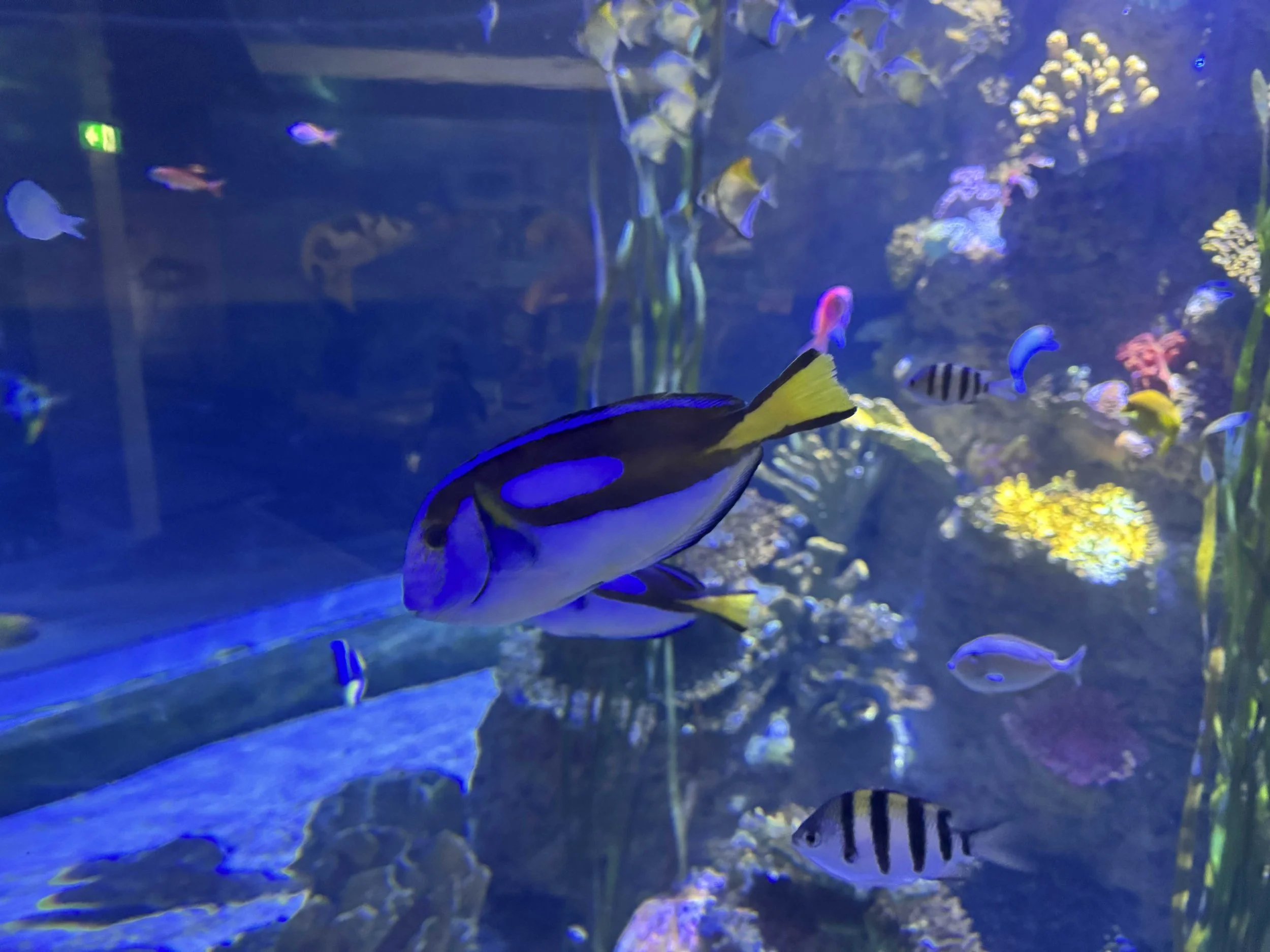
The Blue Tang, also known as the Regal Blue Tang or Hippo Tang, is scientifically known as Paracanthurus hepatus. Its vivid blue-and-black pattern and yellow tail make it especially popular.
Despite its attractive appearance, this species grows into an active swimmer and should not be selected simply because it is attractive as a juvenile. Its eventual adult size and need for open swimming space should be considered before purchase.
Sailfin Tang
The Sailfin Tang (Zebrasoma veliferum) gets its common name from its large dorsal and anal fins, which can spread dramatically.
This species can become quite large, making a spacious aquarium particularly important. It also needs opportunities to graze and explore.
Kole Tang
The Kole Tang, or Yellow-Eyed Kole Tang (Ctenochaetus strigosus), belongs to the bristletooth group of tangs. It is valued for its ability to browse algae and other material from rocks and aquarium surfaces.
Compared with some larger tangs, its eventual size can make it a more practical choice for certain marine aquariums, although it still requires sufficient swimming room and excellent water quality.
Powder Blue Tang
The Powder Blue Tang (Acanthurus leucosternon) is famous for its blue body, darker facial area, and contrasting markings.
It is an impressive fish but can be more demanding than some other commonly kept tangs. Stable water conditions, adequate space, good nutrition, and careful disease prevention are particularly important.

Other Tang Species
Other commonly discussed tangs include:
- Achilles Tang
- Purple Tang
- Scopas Tang
- Convict Tang
- Clown Tang
- Tomini Tang
- Naso Tang
- Sohal Tang
- Powder Brown Tang
The right species depends on the aquarium’s size, existing livestock, filtration capacity, and the keeper’s experience.
Tang Fish Size and Aquarium Requirements
One of the most important considerations before buying a tang is adult size, not the size of the fish at the store.
Tang Fish ary considerably in adult length. General care guidance places different species anywhere from roughly 6 inches to more than 20 inches, depending on the species. Aquarium requirements therefore cannot be reduced to one tank-size recommendation for every tang.
How Big Should a Tang Fish Tank Be?
A suitable aquarium should provide:
- Plenty of horizontal swimming space
- Open areas for continuous movement
- Rockwork for grazing
- Hiding places and retreats
- Strong, reliable filtration
- Stable temperature and salinity
- Good oxygenation and water circulation
Some general care guides list 50 gallons as a minimum for certain tangs, but larger species and highly active swimmers require substantially more space. The adult size and swimming behavior of the particular species should determine the aquarium size.
For this reason, buying a small tang for a small aquarium with the intention of upgrading later can create problems if the upgrade does not happen as planned.
Tang Fish Water Conditions
Tangs are marine fish and depend on stable saltwater conditions. Sudden changes can cause stress and make fish more vulnerable to health problems.
A commonly cited general temperature range for tangs is around 74–80°F (23–27°C), while specific gravity is often maintained around 1.020–1.025, depending on the aquarium system and species.
Rather than focusing on a single number, consistency is key.
Important parameters to monitor include:
| Water factor | Why it matters |
|---|---|
| Temperature | Helps maintain stable physiological conditions |
| Salinity | Essential for marine fish health |
| Ammonia | Should remain at an undetectable level in a properly cycled aquarium |
| Nitrite | Should remain at an undetectable level |
| Nitrate | Should be controlled through maintenance and filtration |
| pH | Stability is more important than chasing a particular number |
| Oxygen and circulation | Important for active marine fish |
Regular testing, appropriate filtration, water changes, and avoiding overcrowding can help maintain a stable environment.
What Do Tang Fish Eat?
Most tangs are strongly associated with algae grazing, although diets vary among species. Marine algae and seaweed should form an important part of the diet for many commonly kept tangs.
Good food choices can include:
- Marine algae sheets or nori
- Algae-based pellets
- Herbivore marine flakes
- Spirulina-based foods
- Naturally growing algae
- Suitable frozen foods as dietary supplements
Some tangs will also accept foods such as mysis or brine shrimp, but meaty foods should not replace the algae-rich component of the diet for species that naturally depend heavily on plant material.
How Often Should You Feed a Tang?
Tangs are active grazers and can benefit from regular access to appropriate algae-based food.
Instead of relying on one large feeding, many aquarists provide smaller portions or continuous access to algae sheets. The exact feeding routine should be adjusted according to the species, fish size, tank conditions, and whether the fish is maintaining healthy body condition.
A healthy tang should have a good appetite and maintain normal coloration and body condition.
Tang Fish Behavior and Temperament
Tangs are active rather than sedentary fish. They spend considerable time swimming and grazing, which is one reason a long aquarium with unobstructed swimming areas is valuable.
They can also be territorial.
A tang may become aggressive toward another tang, particularly when the fish have similar body shapes, coloration, or ecological niches. Some species are more assertive than others.
A useful approach is to consider compatibility before adding a fish rather than waiting for aggression to develop.
How to Reduce Aggression
Several practices can help:
- Provide enough swimming and grazing territory.
- Avoid overcrowding.
- Use rockwork to create separate visual areas and hiding places.
- Research the temperament of the exact species.
- Introduce compatible livestock thoughtfully.
- Be particularly cautious when keeping multiple tangs.
Some care guidance recommends adding a tang relatively late in the stocking process because established tangs may become territorial toward newcomers.
Tang Fish Tank Mates
There is no universal list of perfect tank mates because compatibility depends on species, aquarium dimensions, individual temperament, and stocking density.
Potential companions in an appropriately sized marine aquarium can include certain:
- Clownfish
- Gobies
- Wrasses
- Blennies
- Angelfish
- Groupers
- Hawkfish
- Puffers
- Eels
These combinations are not automatically safe in every aquarium. Each species should be researched individually, especially regarding adult size, aggression, feeding competition, and reef compatibility.
Common Tang Fish Health Problems
Tangs can be sensitive to stress and poor aquarium conditions. Some common concerns include marine ich, bacterial infections, fin problems, and other stress-related conditions.
Signs of a Healthy Tang
When choosing a fish, look for:
- Clear eyes
- Strong appetite
- Bright and consistent coloration
- Intact fins
- Normal swimming behavior
- A healthy-looking body rather than an excessively thin appearance
Warning signs include loss of appetite, unusual spots, cloudy eyes, rapid or difficult breathing, weight loss, damaged fins, and lethargy.
If a fish shows signs of illness, prompt consultation with an experienced aquatic professional or aquatic veterinarian is appropriate.
Why Quarantine Matters
Quarantining new marine fish can help reduce the risk of introducing parasites or disease into an established aquarium.
A separate quarantine system also gives the aquarist an opportunity to observe the new fish’s appetite, behavior, and physical condition before introducing it to the display tank.
This is particularly useful when keeping valuable or sensitive marine livestock.
Do Tang Fish Help Control Algae?
Yes, many tang species naturally graze on algae, and this behavior can be useful in a marine aquarium.
However, a tang should not be purchased solely as an algae-cleaning solution.
A healthy aquarium requires balanced nutrient management, appropriate filtration, maintenance, lighting, and stocking. A fish is not a substitute for correcting an underlying algae problem.
Tangs also need their own nutritional needs met, so naturally occurring algae in the aquarium may not always be enough.
Are Tang Fish Good for Beginners?
It depends on the species and the aquarist’s experience.
Some tangs can be manageable when their requirements are properly met, while other species are considerably more demanding because of their adult size, sensitivity, swimming needs, or territorial behavior. General care guidance rates tang difficulty from beginner to advanced depending on species.
For a first marine fish, it is usually better to choose based on the aquarium you can realistically maintain rather than choosing a tang simply because it is colorful.
Before purchasing one, ask:
- How large will this species become?
- Is my aquarium large enough for its adult size?
- Can I provide an appropriate algae-rich diet?
- Are my existing fish compatible?
- Can my filtration handle the eventual bioload?
- Do I have a quarantine setup?
- Am I prepared to care for the fish for many years?
Tang Fish Care Checklist
Before bringing a tang home, make sure you can provide:
- A properly cycled saltwater aquarium
- Adequate swimming space
- Stable temperature and salinity
- Strong filtration and suitable water circulation
- Regular water testing
- An algae-rich diet
- Suitable rockwork and hiding areas
- Compatible tank mates
- A quarantine plan
- Long-term space for the fish’s adult size
Planning these requirements in advance can prevent many of the problems associated with keeping tangs in undersized or unstable aquariums.
Frequently Asked Questions About Tang Fish
Is a tang fish freshwater or saltwater?
Tang fish are saltwater marine fish. They are naturally associated with tropical marine environments and are commonly kept in saltwater aquariums.
Why are tangs called surgeonfish?
They are called surgeonfish because many species have sharp, scalpel-like spines near the base of the tail. These structures are used primarily for defense and territorial interactions.
What is the best food for tang fish?
For many tang species, marine algae and seaweed should be an important part of the diet. Algae sheets, herbivore pellets, spirulina-based foods, and suitable marine foods can be used as part of a balanced feeding program.
How big can tang fish get?
Adult size varies widely by species. Some remain relatively modest in size, while others can grow much larger than the typical aquarium fish. Always research the adult size of a particular tang before purchasing it.
Can tang fish live with other fish?
Yes. Tangs can live successfully with many marine fish when the aquarium is appropriately sized and the species are compatible. However, tangs can be territorial, particularly toward other tangs and similarly shaped fish.
Can you keep two tang fish together?
Sometimes, but it requires careful planning. Multiple tangs can become aggressive toward one another, so aquarium size, species selection, body shape, introduction method, and individual temperament all matter.
Do tang fish eat algae?
Yes. Many tangs are important algae grazers and naturally spend much of their time searching surfaces for algae. In captivity, they should still receive an appropriate supplemental diet rather than relying entirely on algae growing in the aquarium.
How long do tang fish live?
Lifespan varies by species and husbandry. Some tangs can live for many years in suitable conditions, so purchasing one should be considered a long-term commitment.
Conclusion
Tang fish are beautiful, energetic marine fish that can become impressive inhabitants of a well-maintained saltwater aquarium. Their colorful appearance and natural algae-grazing behavior are major attractions, but successful care depends on more than appearance.
The most important factors are appropriate aquarium space, stable water quality, a suitable algae-rich diet, compatible tank mates, and proper long-term planning.
If you are choosing a tang, start by researching the exact species rather than treating all tangs as identical. Consider its adult size, temperament, feeding requirements, and swimming behavior against the aquarium you actually have. With the right preparation, a tang can be a fascinating and rewarding part of a marine aquarium for many years.