game
Squishy Toys A Complete Guide to Soft, Satisfying, and Fun Fidget Toys

Squishy toys have become a popular choice for people who enjoy soft textures, playful designs, and hands-on activities. From cute animal shapes and food-inspired designs to simple foam squeezers, these toys come in many styles and sizes.
Part of their appeal is their simple design: you squeeze, stretch, or gently manipulate the toy and then let it return toward its original shape. For many people, that repetitive motion can simply be enjoyable and provide something to do with their hands while studying, relaxing, or taking a break.
But with so many types available, choosing the right one can be confusing. This guide explains what squishy toys are, the different varieties available, what to consider before buying one, and how to keep them clean and in good condition.
What Are Squishy Toys?
Squishy toys are soft, squeezable toys designed to be pressed or compressed by hand. Many are made from flexible foam or similar materials that allow them to deform when squeezed and gradually regain their shape.
They are often designed with bright colors, cute characters, miniature food shapes, animals, fruits, or everyday objects. Some are highly detailed collectibles, while others are designed primarily as simple fidget toys.
Their appeal usually comes from a combination of:
- Soft and flexible textures
- Satisfying squeezing action
- Fun shapes and designs
- Small, portable sizes
- Different textures and levels of firmness
- Collectible styles and themes
Why Are Squishy Toys So Popular?
The popularity of these toys comes from their combination of tactile appeal and playful design.
A Simple Hands-On Activity
Some people simply enjoy having something to squeeze or manipulate with their hands. The repetitive movement can make a short break more enjoyable without requiring a screen or complicated activity.
Cute and Creative Designs
Squishy toys are available in countless designs. Food-shaped versions may look like miniature cakes, fruit, bread, or desserts, while animal-themed versions can feature cats, bears, dogs, and other characters.
The visual design is often just as important as the texture.
Easy to Carry
Many squishies are compact enough to fit into a pencil case, backpack, or small storage box. This makes them convenient for people who enjoy tactile toys at home or during appropriate free time.
Collectible Appeal
Some enthusiasts enjoy collecting squishies based on particular themes, characters, colors, or shapes. A collection can become a fun way to organize favorite designs rather than simply owning one toy.
Different Types of Squishy Toys
Not every squishy feels the same. The material, shape, size, and construction can significantly affect the experience.
Slow-Rising Squishies
Slow-rising squishies are designed to compress easily and then gradually expand back toward their original shape.
The slow recovery is one of the characteristics that makes this style particularly satisfying for people who enjoy watching the toy change shape.
Foam Squishies
Foam versions are among the most common styles. They are generally lightweight and available in many different shapes.
Their firmness can vary considerably, so two foam toys that look similar may feel very different when squeezed.
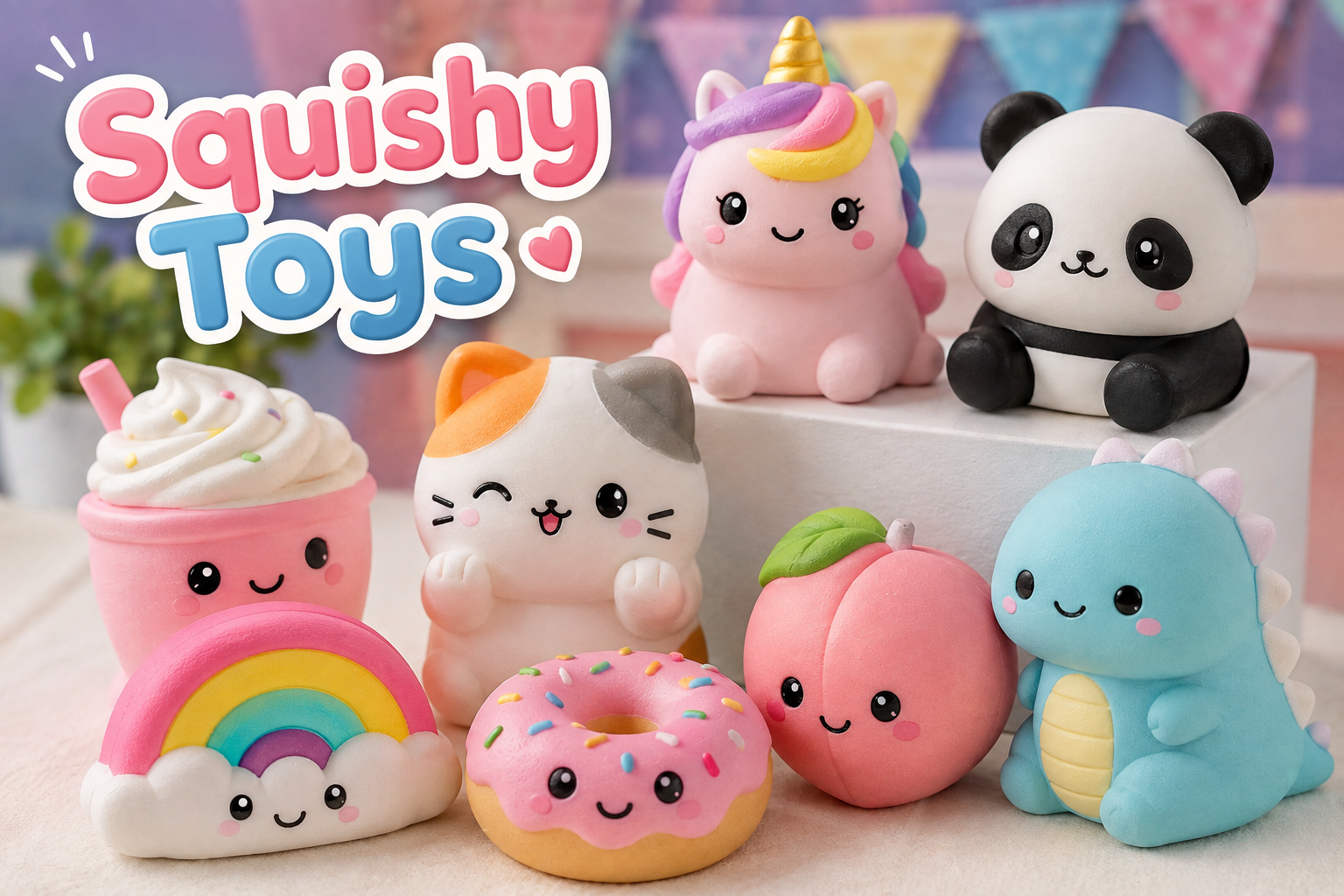

Character Squishies
These feature recognizable cartoon-inspired, animal, or fantasy-style shapes. Their visual appeal makes them especially popular with collectors.
Food-Shaped Squishies
Food designs include miniature versions of items such as:
- Cakes
- Bread
- Fruit
- Donuts
- Ice cream
- Cupcakes
- Pastries
These designs often combine realistic details with an intentionally cute appearance.
Mini Squishies
Miniature versions are small enough to function Squishy toys as desk toys or collectibles. Their small size makes them easy to organize, although very small pieces may not be appropriate for young children.
How to Choose the Right Squishy Toy
Choosing a squishy is less about finding the most expensive option and more about finding one that suits your preferences.
1. Consider the Texture
Think about whether you prefer a very soft, slow-rising texture or something firmer and more resistant.
If possible, checking product information or reviews can help you understand how a particular toy feels before purchasing it.
2. Check the Size
Consider where you plan to keep or use the toy.
A larger squishy may be more comfortable to hold, while a miniature version may be easier to carry and store.
3. Look at the Material
Check the manufacturer’s description for information about the material. This can help you understand how the toy should be handled and cleaned.
Avoid products with unclear safety information, especially when buying toys for children.
4. Choose a Design You Actually Like
Because squishy toys come in so many shapes, appearance is an important part of the experience.
You might prefer:
- Animals
- Food
- Fantasy characters
- Simple geometric designs
- Pastel-colored objects
- Funny or unusual shapes
5. Check the Recommended Age
Always follow the manufacturer’s recommended age range. Some squishies may contain small parts, accessories, or decorations that are unsuitable for younger children.
Squishy Toys vs. Other Fidget Toys
Squishies are just one type of tactile toy. Different fidget toys provide different sensations.
| Toy type | Main interaction | Typical appeal |
|---|---|---|
| Squishy toy | Squeezing | Soft, repetitive tactile sensation |
| Stress ball | Compressing | Simple hand activity |
| Fidget spinner | Spinning | Repetitive rotational movement |
| Fidget cube | Pressing, switching, clicking | Multiple tactile actions |
| Putty | Stretching and molding | Creative manipulation |
There is no universally “best” fidget toy. Personal preference matters most.
Are Squishy Toys Good for Relaxation?
Squishy toys can be an enjoyable way to occupy your hands during a break. Some people like repetitive squeezing because it gives them a simple physical activity to focus on.
However, it is better to think of a squishy as a recreational or sensory toy rather than a guaranteed solution for stress, anxiety, or other mental-health concerns.
If you are feeling overwhelmed, talking with a trusted adult or appropriate support person can be more helpful than relying on a toy alone.
How to Clean Squishy Toys
Keeping a squishy clean is important because the surface can collect dust, oils, and dirt through regular handling.
Before cleaning, check the manufacturer’s care instructions because materials can differ.
For many washable designs, a gentle approach is safest:
- Use a soft, slightly damp cloth.
- Gently wipe the surface.
- Avoid harsh chemicals unless the manufacturer specifically recommends them.
- Do not soak the toy unless its instructions say that it is washable.
- Allow it to dry completely before storing it.
If the surface becomes cracked, sticky, unusually damaged, or starts shedding pieces, it is generally better to stop using the toy.
How to Store Squishy Toys
Proper storage can help keep squishies looking and feeling better.
Keep Them Away From Excessive Heat
High temperatures can affect some foam and plastic materials. Store squishies in a cool, dry place away from direct sunlight and heat sources.
Avoid Crushing Them Under Heavy Objects
Long periods of pressure may change the shape of some squishy toys.
A storage box, drawer, or shelf can provide a simple solution.
Keep Them Clean
Dust and dirt can become more noticeable on soft surfaces. Regular gentle cleaning can help maintain their appearance.
Squishy Toy Safety Tips
Although squishy toys are generally simple recreational products, basic safety precautions are still important.
- Follow the manufacturer’s age recommendations.
- Inspect the toy regularly for damage.
- Do not use a damaged toy that is leaking or breaking apart.
- Keep small squishies and detachable pieces away from very young children.
- Do not intentionally cut, puncture, or modify the toy.
- Follow the manufacturer’s cleaning and storage instructions.
- Wash your hands after handling a toy if its surface becomes dirty.
A toy should also be used for its intended purpose rather than as something to chew, throw, or place near the face.
Are Squishy Toys Worth Buying?
For people who enjoy soft textures, cute designs, or simple tactile activities, squishy toys can be an inexpensive and entertaining addition to a toy collection or desk.
The best choice depends on what matters most to you. Someone interested in collecting may prioritize appearance and unique designs, while someone who simply enjoys squeezing may care more about texture and firmness.
Before buying, compare the material, size, recommended age, design, and care instructions rather than choosing based solely on appearance.
Frequently Asked Questions
What are squishy toys made from?
Many squishy toys are made from flexible foam or other soft synthetic materials. The exact material varies between products, so checking the manufacturer’s description is the best way to identify what a particular toy contains.
What is a slow-rising squishy?
A slow-rising squishy is designed to slowly return toward its original shape after being compressed. The gradual recovery is one of the defining features of this type of toy.
Can squishy toys be washed?
Some can be gently cleaned, but not every squishy is washable. Always check the manufacturer’s care instructions before using water or cleaning products.
How should squishy toys be stored?
Store them somewhere cool, dry, and clean. Keeping them away from direct sunlight, excessive heat, and prolonged heavy pressure can help protect their shape and surface.
Are squishy toys suitable for children?
Suitability depends on the specific product. Always check the manufacturer’s recommended age and inspect the toy for small or detachable components.
What is the difference between a squishy and a stress ball?
Both can be squeezed, but they are designed differently. Squishies often emphasize soft textures, slow recovery, and decorative shapes, while stress balls are generally simpler and designed primarily for repeated compression.
Why do people collect squishy toys?
Collectors may enjoy the designs, variety of shapes, textures, themes, and the process of finding new additions. Some collections focus on particular characters, animals, foods, or color themes.
Conclusion
Squishy toys combine playful designs with a simple hands-on experience, making them appealing to collectors and anyone who enjoys tactile toys. From slow-rising foam designs to miniature food and animal shapes, there is a wide variety to explore.
When choosing one, focus on material, texture, size, design, age recommendations, and care instructions. With sensible handling and proper storage, a good-quality squishy can remain a fun addition to a collection or everyday toy selection.