beauty
Mount Fuji Facts 15 Fascinating Things to Know About Japan’s Iconic Mountain

Mount Fuji is one of Japan’s most recognizable natural landmarks and a powerful symbol of the country’s landscape, culture, and history. Its nearly symmetrical volcanic shape, snow-covered summit, and dramatic appearance have inspired artists, travelers, photographers, and writers for centuries.
If you are looking for mount fuji facts there is much more to discover than its famous appearance. From its impressive height and volcanic origins to its cultural importance and climbing traditions, Mount Fuji has a fascinating story.
This guide explores the most important and interesting facts about Mount Fuji in a simple, reader-friendly format.
These mount fuji facts are useful for anyone interested in Japan’s geography and culture.
Here are more useful mount fuji facts to help you understand this iconic mountain
2. Mount Fuji Is a Volcano
Mount Fuji is not simply a mountain—it is a stratovolcano, formed from layers of lava, volcanic ash, and other materials produced by successive eruptions
One of the most interesting mount fuji facts is its long and fascinating volcanic history.
Its impressive cone developed over a very long period through repeated volcanic activity.
Is Mount Fuji Still Active?
Yes. Mount Fuji is classified as an active volcano, although it has not erupted since 1707.
The last major eruption began in December 1707 and continued for several weeks. Known as the Hōei eruption, it deposited volcanic ash over surrounding areas, including locations near present-day Tokyo.
3. Mount Fuji Has a Remarkably Symmetrical Shape
The mountain is famous for its broad, almost perfectly symmetrical cone. This shape is one reason it has become such an important visual symbol of Japan.
Its appearance changes depending on the season, weather, sunlight, and viewing location. Snow on the upper slopes during colder months creates the classic image seen in photographs and artwork.
4. Mount Fuji Is Located on Japan’s Honshu Island
Mount Fuji stands on Honshu, Japan’s largest and most populous island.
The mountain is located near the boundary between Yamanashi Prefecture and Shizuoka Prefecture, southwest of Tokyo.
Its location makes it relatively accessible to visitors traveling from the Tokyo metropolitan area.
5. Mount Fuji Is Part of a UNESCO World Heritage Site
Mount Fuji was added to the UNESCO World Heritage List in 2013 as a cultural site.
Rather than being recognized only for its natural beauty, the site reflects the mountain’s influence on Japanese art, religion, pilgrimage, and cultural traditions.
This recognition highlights how Mount Fuji has influenced Japanese culture far beyond its physical landscape.
6. The Mountain Has Religious Significance
Mount Fuji has long been associated with spiritual traditions in Japan.
For centuries, people have climbed the mountain as part of religious pilgrimages. Shinto and Buddhist traditions have both contributed to the mountain’s cultural importance.
Shrines, temples, pilgrimage routes, and other religious sites around Fuji reflect this long relationship between people and the mountain.
7. The Name “Fuji” Has an Ancient History
The exact origin and meaning of the name “Fuji” have been debated by scholars.
The mountain has appeared in Japanese literature and historical records for many centuries. Its name and image became deeply established in Japanese culture long before modern tourism developed.
8. Mount Fuji Has Inspired Famous Japanese Art
Mount Fuji has been represented in countless paintings, prints, poems, and other works of art.
One of the best-known examples is Katsushika Hokusai’s series Thirty-Six Views of Mount Fuji. The artwork helped establish powerful visual representations of the mountain and contributed to its international recognition.
Mount Fuji has also appeared in the work of other Japanese artists throughout history.
9. The Mountain Is a Popular Photography Subject
Few Japanese landscapes are photographed as often as Mount Fuji.
Photographers are drawn to the mountain because its appearance can change dramatically with weather and lighting. Reflections in lakes, seasonal colors, cherry blossoms, and snowy peaks can all create distinctive views.
Some of the most popular viewing areas are around the Fuji Five Lakes, where the mountain can be photographed from different perspectives.
10. There Are Five Famous Lakes Around Mount Fuji
The Fuji Five Lakes are a group of lakes located around the northern and western sides of the mountain.
They are:
- Lake Kawaguchi
- Lake Yamanaka
- Lake Sai
- Lake Shōji
- Lake Motosu
These lakes are popular for sightseeing, photography, outdoor activities, and mountain views.

11. Mount Fuji Can Be Climbed
Mount Fuji attracts climbers from Japan and around the world.
The official climbing season is generally concentrated in the summer because conditions outside the season can become dangerous due to snow, ice, cold temperatures, and severe weather.
There are several established routes to the summit, with the Yoshida Trail being one of the most commonly used.
Climbers should always check official information about trail conditions, weather, opening dates, fees, transportation, and safety requirements before beginning a climb.
12. The Summit Offers Extraordinary Views
Reaching the summit can provide spectacular views across the surrounding landscape.
On exceptionally clear days, climbers may see distant parts of central Japan. Sunrise from Mount Fuji is particularly famous and is traditionally associated with the experience of reaching the summit before dawn.
However, visibility is highly dependent on weather conditions.
13. Mount Fuji Has Three Main Peaks in Its Volcanic History
The present mountain developed through multiple stages of volcanic formation.
Geologists commonly describe the development of Mount Fuji through older volcanic structures, including Komitake, Ko-Fuji, and the present Shin-Fuji volcano.
The modern cone formed through volcanic activity over thousands of years.
14. Mount Fuji Is a Symbol of Japan
Beyond geography, Mount Fuji has become a national symbol.
Its image appears in photography, tourism campaigns, artwork, literature, souvenirs, and popular culture. The mountain’s distinctive profile is recognizable around the world and is strongly associated with Japan.
Its significance comes from the combination of natural beauty, cultural history, spirituality, and artistic influence.
15. Mount Fuji Looks Different Throughout the Year
Seasonal changes dramatically affect the appearance of the mountain.
Spring
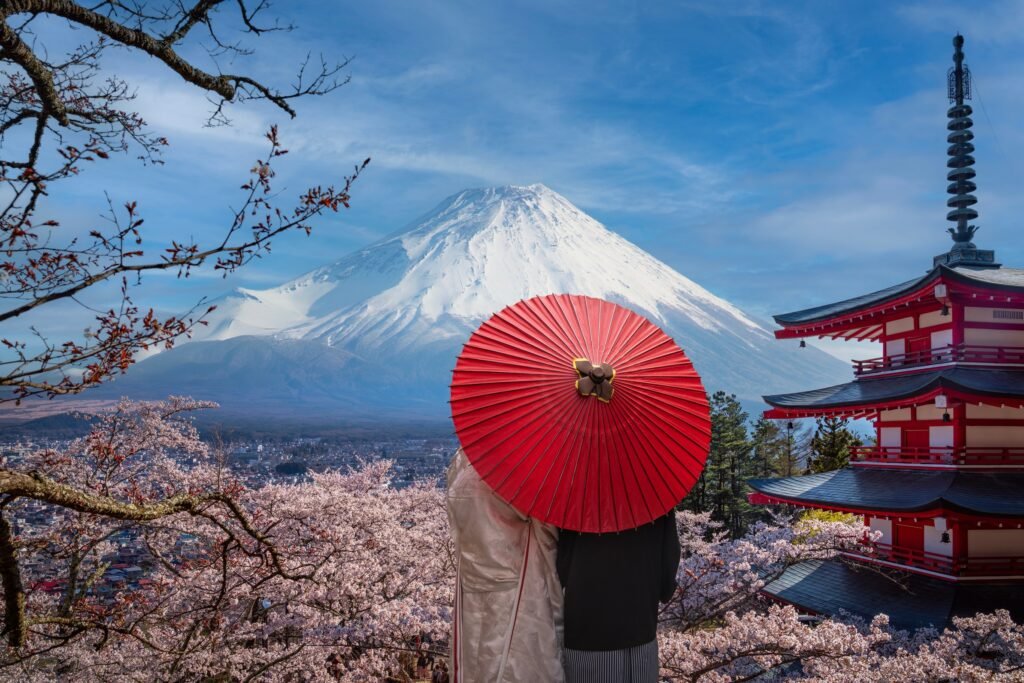
Cherry blossoms and fresh greenery can create colorful views of the snow-capped peak.
Summer
The mountain becomes more accessible to climbers during the official climbing season, while much of the surrounding landscape becomes green.
Autumn
Red, orange, and yellow foliage provides striking contrasts against the mountain.
Winter
Clearer skies and extensive snow can create some of the most recognizable views of Mount Fuji.
Mount Fuji Facts at a Glance
| Fact | Detail |
|---|---|
| Country | Japan |
| Island | Honshu |
| Height | 3,776 meters (12,389 feet) |
| Type | Stratovolcano |
| Status | Active volcano |
| Last major eruption | 1707 |
| UNESCO designation | 2013 |
| Famous nearby lakes | Fuji Five Lakes |
| Cultural importance | Art, religion, literature, and pilgrimage |
| Popular activities | Sightseeing, photography, hiking, and climbing |
Why Is Mount Fuji So Famous?
Mount Fuji facts fame comes from several mount fuji factsfactors working together. Its nearly symmetrical volcanic cone makes it visually distinctive, while its location near major population centers has made it accessible to generations of visitors.
Its role in Japanese religion and art has also given the mountain meaning beyond its physical appearance.
For travelers, photographers, and anyone interested in Japanese history, Mount Fuji offers a combination of natural beauty and cultural significance that few landmarks can match.
Best Ways to Experience Mount Fuji
Visitors can experience the mountain in several ways:
- View it from the Fuji Five Lakes for scenic landscapes and photography.
- Visit nearby shrines and cultural sites to learn about its spiritual history.
- Explore surrounding towns and nature areas for different perspectives.
- Climb the mountain during the official season if properly prepared.
- Photograph the mountain at different times of day because lighting can dramatically change its appearance.
Frequently Asked Questions
What is Mount Fuji famous for?
Mount Fuji is famous for its symmetrical volcanic shape, impressive height, cultural importance, artistic influence, and status as Japan’s highest mountain.
These mount fuji facts help explain why the mountain is famous around the world
Learning these mount fuji facts can help readers better understand Japan’s most famous mountain.
How tall is Mount Fuji?
Mount Fuji is approximately 3,776 meters (12,389 feet) tall, making it the highest mountain in Japan.
Is Mount Fuji an active volcano?
Yes. Mount Fuji is considered an active volcano. Its most recent major eruption occurred in 1707.
Where is Mount Fuji located?
Mount Fuji is located on Honshu Island in Japan, between Yamanashi and Shizuoka prefectures and relatively close to Tokyo.
Can tourists climb Mount Fuji?
Yes. People can climb Mount Fuji using established routes during the official climbing season. Conditions can be challenging, so visitors should prepare carefully and follow current official safety guidance.
Why is Mount Fuji important to Japanese culture?
Mount Fuji has influenced Japanese religion, art, literature, pilgrimage traditions, and national identity for centuries.
What are the Fuji Five Lakes?
The Fuji Five Lakes are Lake Kawaguchi, Lake Yamanaka, Lake Sai, Lake Shōji, and Lake Motosu. They are well-known locations for enjoying views of Mount Fuji.
When is Mount Fuji covered in snow?
Snow can remain on the upper mountain during colder months, although the exact timing and amount vary according to weather and seasonal conditions.
Conclusion
Mount Fuji is far more than Japan’s highest mountain. Its volcanic history, remarkable shape, spiritual importance, artistic legacy, and connection to Japanese culture have made it one of the world’s most recognizable natural landmarks.
These mount fuji facts show why the mountain continues to attract climbers, photographers, tourists, artists, and history enthusiasts. Whether viewed from a lakeside, captured in a photograph, or experienced from one of its climbing trails, Mount Fuji remains an extraordinary part of Japan’s natural and cultural landscape.
These mount fuji facts show why Mount Fuji remains an important symbol of Japan.