Tech
Fisker Ocean A Complete Guide to the Electric SUV, Features, Range and What Happened

The Fisker Ocean was designed as an ambitious electric SUV aimed at buyers looking for long range, modern technology, distinctive styling, and a more sustainable approach to driving. Developed by Fisker Inc. and manufactured by Magna Steyr in Austria, the Ocean entered customer deliveries in 2023 and quickly attracted attention in the growing electric-vehicle market.
However, the story of the Ocean is not simply about its specifications or design. Fisker Inc. filed for Chapter 11 bankruptcy protection in June 2024 after facing financial, production, delivery, and business challenges. The company’s bankruptcy eventually brought production of the Ocean to an end.
That makes the Ocean an unusual vehicle today. It remains an interesting electric SUV with impressive hardware and distinctive features, but anyone considering a used example also needs to understand the company’s current situation, software support, service options, recalls, and parts availability.
What Is the Fisker Ocean?
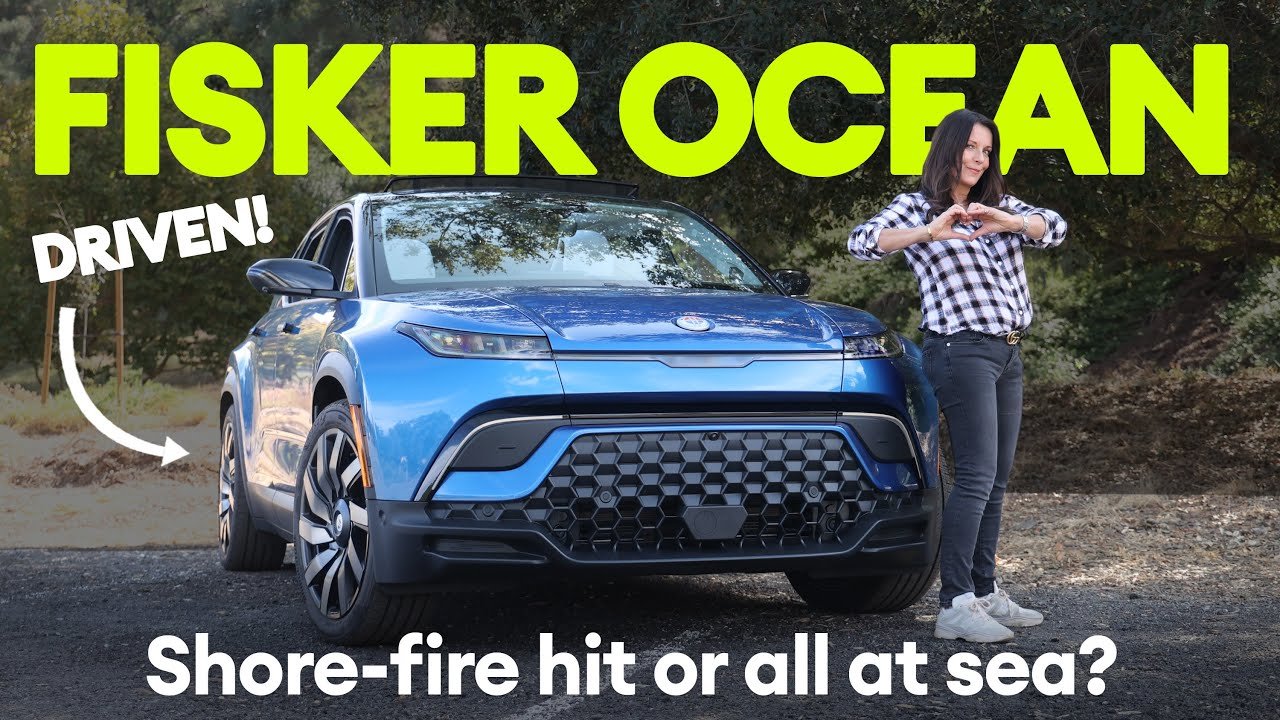
The Fisker Ocean is a battery-electric midsize crossover SUV created by Fisker Inc. The vehicle was positioned as a technology-focused alternative to established electric SUVs.
Its design was led by Henrik Fisker, whose automotive career includes work on several recognizable performance and luxury vehicles. The Ocean was intended to combine an attractive exterior with an environmentally focused interior and a large battery designed for long-distance driving.
The production vehicle was offered in several versions, including:
- Ocean Sport
- Ocean Ultra
- Ocean Extreme
- Ocean One
Different versions used different powertrains and equipment levels. Higher-performance variants offered dual-motor all-wheel drive, while the Sport used a simpler front-wheel-drive configuration.
Fisker Ocean Design and Interior
One of the Ocean’s strongest characteristics was its distinctive design.
Rather than following the conservative styling used by many electric SUVs, Fisker gave the Ocean a clean exterior with a relatively aerodynamic shape. The cabin was designed around digital displays and a modern dashboard layout.
Depending on configuration, notable features included:
- Large central touchscreen
- Digital driver display
- Panoramic glass roof
- SolarSky roof technology on selected versions
- California Mode, which can open multiple windows
- Vegan-oriented interior materials
- Large cargo area
- Multiple driver-assistance technologies
The interior concept was particularly important to Fisker’s sustainability message. The company promoted the use of recycled and alternative materials in various parts of the vehicle.
Fisker Ocean Performance and Range
Performance varies considerably depending on the Ocean trim.
Fisker’s published specifications for the One and Extreme versions listed a 113-kWh battery, up to 468 horsepower in standard configuration, and 564 horsepower when Boost was used. The same specification sheet listed 0–100 km/h acceleration of about 4.0 seconds.
The published WLTP range for those versions was approximately:
| Feature | Fisker Ocean One / Extreme |
|---|---|
| Battery capacity | 113 kWh |
| Published WLTP range | Up to about 707 km |
| Horsepower | Up to 468 hp |
| Boost output | Up to 564 hp |
| 0–100 km/h | About 4.0 seconds |
| Top speed | 205 km/h |
| Towing capacity | Up to 1,820 kg |
Real-world range can be lower than laboratory figures. Temperature, driving style, road conditions, wheel size, climate control, and other factors can all affect an electric vehicle’s range.
Is the Ocean Fast?
The higher-performance Ocean versions can be quick for a midsize electric SUV. The combination of dual electric motors and all-wheel drive gives the upper trims strong acceleration.
The Ocean Extreme, for example, was engineered to deliver substantially more performance than the entry-level Sport. This helped the vehicle compete for attention against other performance-oriented electric crossovers.
Charging the Fisker Ocean
Charging capability is another important consideration for an electric SUV.
Fisker’s published specifications listed an estimated Mode 3 charging time of around 12 hours and a DC fast-charging time of approximately 33 minutes under the conditions specified by the manufacturer.
Actual charging times depend on several factors, including:
- Charger power
- Battery temperature
- Battery state of charge
- Charging infrastructure
- Vehicle software
- Environmental conditions
For daily driving, home charging can be convenient because the vehicle can replenish its battery while parked overnight.
Technology and Special Features
The Ocean was designed around technology rather than simply functioning as a conventional electric SUV.

California Mode
One of the most recognizable features was California Mode. When equipped, the system can open multiple windows and the liftgate window to create a more open-air driving experience.
Rotating Center Display
The Ocean was also promoted with a rotating central touchscreen that could change orientation for different uses. This was intended to give drivers a more flexible interface for navigation and entertainment.
SolarSky Roof
Some versions featured Fisker’s SolarSky roof, designed to use solar energy to contribute to the vehicle’s electrical energy needs.
The amount of energy generated naturally depends on sunlight, location, weather, and other environmental conditions, so it should not be viewed as a replacement for normal charging.
What Happened to Fisker?
This is the most important part of the Fisker Ocean story for anyone researching the vehicle today.
Fisker struggled with cash flow, production, distribution, and other business challenges as it attempted to increase deliveries. In March 2024, the company announced a temporary production pause while seeking additional funding. Reuters reported that Fisker had also been dealing with a significant cash shortage and had produced roughly 1,000 vehicles between February 1 and March 15 of that year.
In June 2024, Fisker filed for Chapter 11 bankruptcy protection in the United States. The company sought to sell assets while dealing with its financial difficulties.
The bankruptcy process later moved toward liquidation. Court records show that the Chapter 11 liquidation plan became effective in October 2024.
Magna, which had manufactured the Ocean, subsequently terminated its manufacturing agreement with Fisker as part of the bankruptcy-related process.
Fisker Ocean Recalls and Reliability Concerns
The Ocean’s history also included several technical and safety concerns.
In June 2024, more than 12,000 Ocean vehicles were recalled over an issue involving exterior door handles that could stick and prevent doors from opening. Reuters also reported that U.S. regulators had several investigations involving the Ocean at that time.
Other reported issues involving some vehicles included software problems, key-fob difficulties, loss-of-power complaints, braking concerns, and other mechanical or electronic faults. These reports do not mean every Ocean has the same problems, but they are important considerations when evaluating a used vehicle.
Potential buyers should check the individual vehicle’s VIN, recall history, maintenance records, software condition, and available service support before purchasing.
Is the Fisker Ocean Still Worth Considering?
The answer depends heavily on the buyer’s circumstances.
The Ocean can be appealing because of its:
- Distinctive styling
- Large battery
- Strong performance in higher trims
- Spacious SUV body
- Interesting technology
- Potentially attractive used-market pricing
However, the risks are significant.
Fisker is no longer operating as a normal automaker, and owners cannot rely on the same manufacturer support structure available from established car companies. The bankruptcy also created concerns about parts, warranty coverage, software, and long-term service.
Fisker’s service information website remains accessible and provides technical and repair information through subscription plans, but this is not equivalent to having a conventional automaker network behind the vehicle.
What Should Used Buyers Check?
Before buying a used Ocean, consider checking:
- VIN and recall history
Confirm whether applicable recalls have been addressed. - Software condition
Test the touchscreen, displays, cameras, driver-assistance features, locks, windows, and other electronic systems. - Charging system
Test both AC and DC charging if possible. - Battery condition
Look for unusual range loss or charging behavior. - Key fobs
Make sure all available keys work correctly. - Body and mechanical condition
Inspect tires, suspension, brakes, doors, windows, and charging equipment. - Parts and service availability
Confirm that qualified technicians and necessary replacement parts are available in your area.
Why the Fisker Ocean Remains Interesting
Despite Fisker’s collapse, the Ocean remains an interesting example of how quickly the electric-vehicle industry can evolve.
The vehicle offered features that were unusual for its class, including a large battery, long advertised range, innovative interior technology, and a design focused on sustainability.
Its failure was therefore not simply a case of an unpopular electric vehicle. Fisker’s problems involved financing, manufacturing, distribution, scaling, and the difficulties of competing in an increasingly demanding automotive market. Reuters described the company’s attempt to compete with established EV makers as being undermined by production and supply-chain challenges as well as financial pressures.
Frequently Asked Questions
Is the Fisker Ocean still being produced?
No. Production ended after Fisker Inc. entered bankruptcy proceedings. Magna’s manufacturing relationship with Fisker was also terminated during the bankruptcy process.
Is Fisker still in business?
Fisker Inc. went through Chapter 11 bankruptcy and subsequently entered a liquidation process. The company is therefore no longer operating as a conventional active automaker.
How far can a Fisker Ocean travel on one charge?
Fisker’s published specifications listed up to approximately 707 km of WLTP range for certain One and Extreme configurations. Actual range varies according to conditions, driving style, equipment, and temperature.
Is the Fisker Ocean fully electric?
Yes. The Ocean is a battery-electric SUV and does not use a conventional gasoline engine for propulsion.
Does the Fisker Ocean have all-wheel drive?
Some versions do. Higher-performance variants such as the One and Extreme use dual-motor all-wheel drive, while the Sport configuration uses front-wheel drive.
Should I buy a used Fisker Ocean?
It can be an attractive option for an informed buyer, particularly because of its technology and electric range. However, the bankruptcy creates additional ownership risks. Anyone considering one should carefully investigate recalls, software, battery condition, service availability, and replacement-part access before purchasing.
Conclusion
The Fisker Ocean remains one of the more unusual chapters in the modern electric-vehicle market. It offered a striking design, impressive advertised range, strong performance in higher trims, and technology intended to differentiate it from established competitors.
But the vehicle’s future became uncertain when Fisker Inc. encountered severe financial and operational difficulties and filed for Chapter 11 bankruptcy in 2024. The subsequent liquidation means today’s Ocean buyers need to think beyond specifications and purchase price.
For someone researching the Ocean as a used EV, the most important question is not simply whether the SUV looks good or has a long range. It is whether the specific vehicle has a healthy battery, working electronics, completed recalls, and realistic access to service and parts.
That combination of innovative engineering and complicated ownership circumstances is what makes the Fisker Ocean both intriguing and challenging to evaluate today.